NiCE
Brand architecture, taxonomy and naming system for a $3B customer-experience company.
Brand architecture, taxonomy and a naming system for a $3B customer-experience company. Built with the CMO, with recommendations to the CEO, President, COO and CMO.
The challenge
NiCE had a growing portfolio and no framework to hold it together. There was no formal taxonomy, naming strategy, governance or process for bringing in acquisitions, so naming decisions were inconsistent and reactive, and the portfolio was hard to scale with any clarity.
The fragmentation diluted the NiCE master brand and overplayed CXone Mpower, so people weren’t sure what each brand stood for. AI at the core was central to NiCE’s strategy, but the architecture and names didn’t show it, which left sales teams to explain the story. Acquisitions were handled inconsistently, and overlapping names blurred things further.
NiCE also had strong brand assets it wasn’t fully using. Several strategic brands were already in place, the categories matched customer segments well, and trademark sprawl was limited. That was an opening: a stronger centre of gravity, more clarity, and naming that helps people find their way instead of getting in it.
The approach
We started with research into where the NiCE brand system was and where it needed to go: interviews with senior leaders and key stakeholders, working sessions with cross-functional teams, a review of internal research and strategy documents, and a competitive review of peers and best-in-class technology companies.
The same problems kept coming up, around clarity, scale and how NiCE’s AI-driven vision showed up, along with clear chances to simplify the architecture and the naming system. From that we built a focused set of recommendations for the CEO, President, COO and CMO, designed to create clarity, build long-term brand equity and give the portfolio room to grow.
The solution
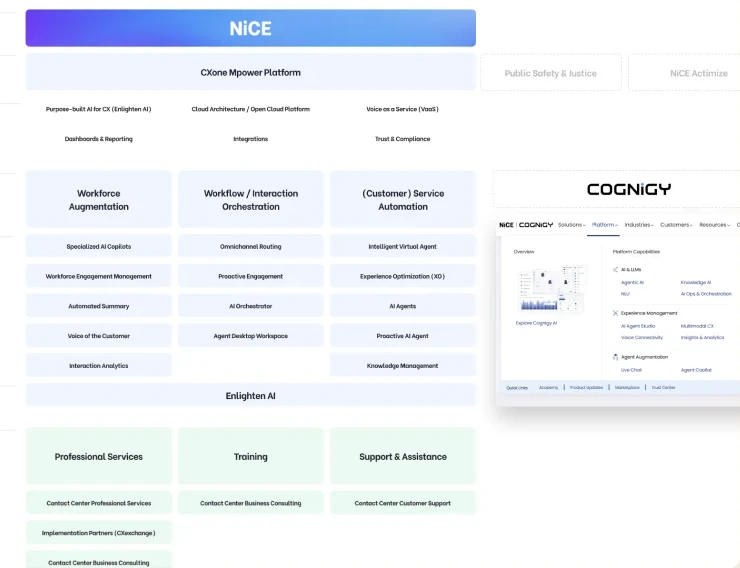
Once leadership agreed on the recommendations, we set a clear brand architecture and taxonomy for the whole portfolio. It defined the layers of the system and how brands, platforms, products, features and add-ons work together.
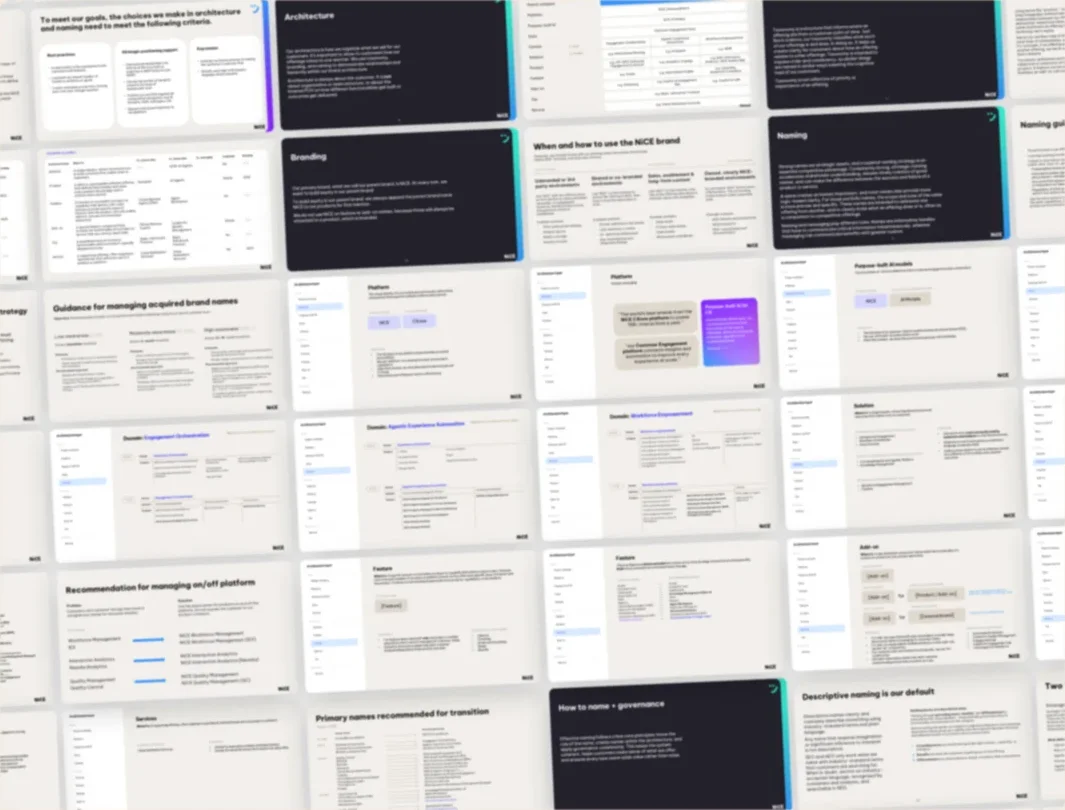
Then we wrote the architecture and naming guidelines to support future growth: when to use each brand, how to build and apply names, and how AI at the core should be expressed. Real examples and recommended renames showed the system working in practice, and a governance framework guides naming decisions from here on.