Cisco
One clear, descriptive naming system for a sprawling portfolio.
Transform Gold 2024 — Best naming system

Context
Cisco had strong brand affinity, but customers didn’t see everything it offered. As a networking leader it had a solid base to grow into security and observability, while specialist competitors were gaining ground. Cisco’s research showed that customers mostly linked the company with hardware, knew the Cisco brand far better than any of its sub-brands, and weren’t attached to the sub-brand names.
Cisco wanted to tell one story: one Cisco, with integrated solutions for a secure, connected future.
The challenge
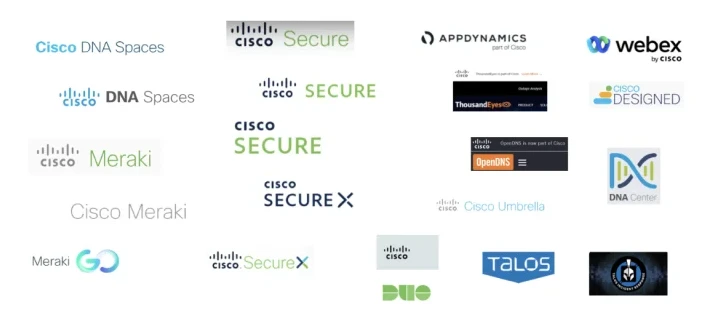
Inconsistent naming was diluting the brand. Forty years of growth had left each business unit with its own naming habits. Abstract and suggestive names showed up at every level of the portfolio, each with its own logo and look, and some sub-brands behaved almost like separate companies.
The result was a sea of disconnected names: some old, some new, some acquired, some competing with Cisco itself, and many with no clear relationship to anything else. Customers and employees couldn’t tell how the products fit together, or how they added up to Cisco.
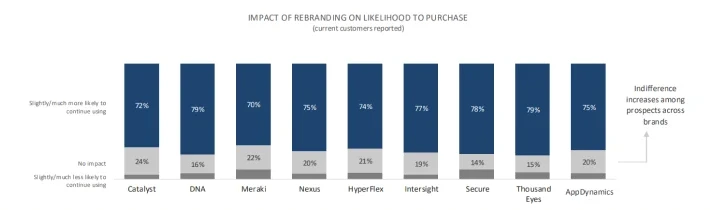
Customers weren’t attached to the existing names either. Asked how a rebrand would affect them, 70 to 79 percent of current customers of every sub-brand said it would make them more likely to keep using the product, and only a few said less likely.
The approach
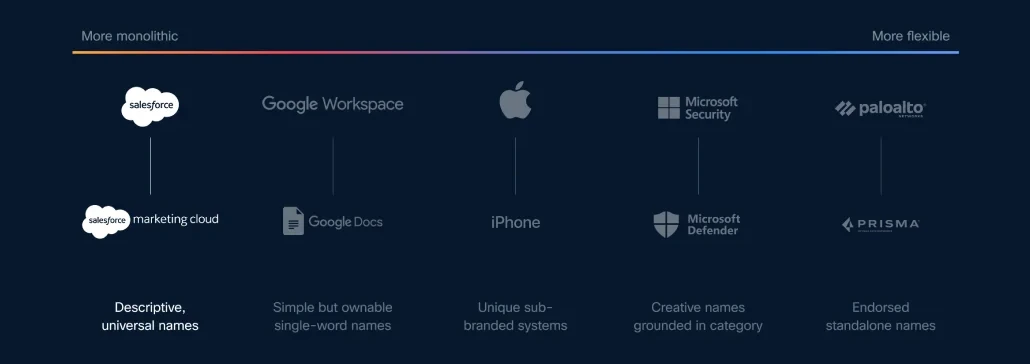
Good naming depends on a well-organized portfolio, so we started with the architecture: where each offering sits and how the offerings relate. Then we proposed naming systems across a spectrum, from monolithic to flexible, to find which would build the most brand equity and stay consistent across the suites:
- Descriptive, universal names, like Salesforce
- Simple, ownable single-word names, like Google
- Unique sub-branded systems, like Apple
- Creative names grounded in their category, like Microsoft
- Endorsed, standalone names, like Palo Alto Networks
The outcome
The descriptive model came out on top. It uses plain, industry-standard words to make clear, concise names, and customers prefer descriptive names because they’re straightforward. With that model in place, the case for cutting back the sub-brands was obvious, and the portfolio became simpler to navigate.
The naming system won Transform Gold 2024 for best naming system ↗.